




What Is a Hypebeast? Meaning, Brands, and How the Culture Got Here
Share
Ask ten people what a hypebeast is and you get ten answers, most of them a little insulting. The word started as a joke, became a job description, and ended up naming an entire economy: limited drops, resale apps, queues at six in the morning for a hoodie. This guide does the full version. The hypebeast meaning as the people who use it mean it, the brands that built the culture, the mechanics that make it work, and why the same instinct has come back around to the 2000s clothes that started it.
In This Article
- Hypebeast Meaning: Where the Word Comes From
- How to Define a Hypebeast Today
- The Hypebeast Brands That Built the Culture
- The Drop: How Hype Is Manufactured
- The Hypebeast Aesthetic, Piece by Piece
- Hypebeast Culture: Forums, Resale and the Queue
- What Hypebeast Has to Do With Y2K
- Is Being a Hypebeast a Bad Thing?
Hypebeast Meaning: Where the Word Comes From
The word is a compound of two older ones. Hype, in the sense of manufactured excitement, has been American slang since at least the 1960s. Beast is the hip-hop usage: someone who goes hard at a thing, relentlessly, past the point of reason. Put together, a hype beast is a person who chases hype relentlessly. The spelling closed up into one word on message boards in the mid-2000s, and in 2005 a Hong Kong teenager named Kevin Ma registered the domain and turned it into a blog about sneakers and streetwear. The site took the name as a badge; the culture had already been using it as an insult.
That is the first thing to understand about the hypebeast definition: it was coined by the culture about itself, and it was never neutral. On the sneaker forums of 2004 and 2005, calling someone a hypebeast meant they bought a shoe because it was hard to get, not because they liked it. The original sin was wanting the thing for its scarcity. Twenty years later the Urban Dictionary entry for hypebeast still carries that sneer: someone who collects clothing and shoes to impress others, who follows trends rather than taste, who knows the resale price before the colorway.
The hype beast meaning has softened since. When a brand like Hypebeast runs a magazine, a shop and a trade show, the word stops being an accusation and becomes a demographic. Most people who use it now mean something closer to a streetwear enthusiast: a person who knows the release calendar, owns a few grails, and dresses in a recognizable way. The insult is still available if you want it. The identity is also available, and a lot of people wear it on purpose.
How to Define a Hypebeast Today
If you had to define hypebeast in one sentence for someone who has never heard the word: a hypebeast is a person whose wardrobe is organized around limited-release streetwear and sneakers, and whose status in the culture depends on access to those releases. Three things in that sentence do the work.
Limited release. Hypebeast clothing is not expensive in the way a suit is expensive. It is scarce on purpose. A hoodie is printed in a run of a few hundred, sold on a Thursday at eleven in the morning, and gone by 11:02. The retail price can be modest; the resale price is where the status lives.
Access. Because the pieces are scarce, owning them proves something about you: that you knew, that you queued, that you had a bot, that you had a friend at the store. Access is the currency. A hypebeast who pays resale is a lesser hypebeast than one who hit retail, and both know it.
Recognizability. The hypebeast aesthetic is legible to other hypebeasts and invisible to everyone else. A box logo, a particular Dunk colorway, a specific collaboration tag inside the collar: these are signals pitched at an audience that can read them. What are hypebeasts, really? People who dress for the five percent of the room that will notice, and who consider the other ninety-five percent irrelevant.
What is a hype beast not? Not simply someone who likes streetwear. Not someone who buys one pair of good sneakers a year. Not a designer-label shopper, who wants the name recognized by everyone. The hypebeast wants the name recognized by the right people. That distinction, between mass luxury and coded scarcity, is the whole culture in miniature.
The Hypebeast Brands That Built the Culture
Every list of hypebeast brands starts in the same two cities, New York and Tokyo, in the early 1990s, and then spreads. These are the labels that defined the category, in roughly the order they mattered.
Stüssy (Laguna Beach, 1980s). Shawn Stussy's surfboard signature on a t-shirt is the origin of streetwear as a business: a small brand, a graphic, a tribe. Stüssy invented the idea that a logo could be a password. Every hypebeast brand since has been a variation on that idea.
Supreme (New York, 1994). James Jebbia's skate shop on Lafayette Street is the brand the word hypebeast was practically invented to describe. The red box logo, the Thursday drop, the collaborations with everyone from Louis Vuitton to a brick: Supreme wrote the playbook for manufactured scarcity and ran it for twenty-five years. If the hypebeast brand had a capital, this is it.
A Bathing Ape (Tokyo, 1993). Nigo's BAPE did in Harajuku what Supreme did in SoHo, with more color. The camo, the shark hoodie, the Bapesta sneaker, the full-zip that closes over the face: BAPE is also the brand most responsible for the Y2K-era crossover between streetwear and rap, when Pharrell and Lil Wayne wore it on every stage of 2005.
Nike SB and Jordan Brand. Not streetwear labels, but the sneaker side of the culture would not exist without them. The Nike SB Dunk of the early 2000s, released in tiny numbers to skate shops, is the shoe that taught a generation to queue. Jordan retros are the blue-chip stock of the resale market. A hypebeast closet is half sneakers, and most of them say Nike somewhere.
Off-White (Milan, 2012). Virgil Abloh's quotation marks and zip ties turned the hypebeast aesthetic into a luxury proposition, then took it to Louis Vuitton. Off-White is the bridge between the streetwear kid and the fashion house, and the reason a hypebeast in 2019 could wear a runway piece without changing tribe.
Palace (London, 2009), Corteiz (London, 2017). The British chapter. Palace brought skate-video humor and the tri-ferg logo; Corteiz brought the guerrilla drop, the Alcatraz logo and a founder, Clint, who treats the brand as a movement first and a label second. Corteiz is what hypebeast culture looks like when it refuses to be bought.
Fear of God, Kith, Yeezy, Chrome Hearts, Vlone, Anti Social Social Club. The second wave. Jerry Lorenzo's Fear of God made the hypebeast silhouette expensive and beige; Ronnie Fieg's Kith made the collaboration a business model; Yeezy made a single sneaker shape the most resold object of a decade; Chrome Hearts made silver crosses a status item for rappers and the hypebeast clothing brands that imitate them; Vlone and ASSC proved a logo and a drop could carry a label with almost no product.
What unites brands hypebeast culture adopts? Not price, and not even quality. Each one controls supply, speaks in a graphic language its audience can read, and keeps a release calendar that turns buying into an event. That is the formula, and it is why a hypebeast brand can be a skate label, a Japanese ape or a Milan fashion house and still be the same kind of thing.
The Drop: How Hype Is Manufactured
The mechanism that separates hypebeast culture from ordinary shopping is the drop. A conventional brand makes a season, ships it to stores, and marks it down when it does not sell. A hypebeast brand makes a small amount, announces a day and a time, and sells everything in minutes. Nothing is marked down because nothing is left.
The drop does three things. It creates a deadline, which creates urgency. It creates a shortage, which creates a resale market. And it creates a story: the queue, the raffle, the bot that got the pair, the friend who missed out. Every drop generates content, and the content generates the next drop's demand. Supreme's Thursday releases ran on this loop for two decades; Nike's SNKRS app industrialized it; Corteiz turned it into a treasure hunt with coordinates posted on Instagram.
The resale market is not a side effect of this system, it is the proof the system works. StockX and GOAT exist because a pair of shoes that retailed for the price of a decent dinner can trade for the price of a used car a week later. The resale price is the scoreboard. A hypebeast who tells you what a piece "goes for" is telling you its rank.
The Hypebeast Aesthetic, Piece by Piece
Hypebeast culture changed its uniform every few years, but the underlying structure stayed the same: a hoodie or tee that carries the logo, a pair of sneakers that carries the status, a bottom that frames both, and a few accessories that prove you were paying attention. Here is the kit, in the version the 2020s inherited from the 2000s.
The hoodie. The center of the outfit. Oversized, heavyweight, often a full zip, with a graphic on the chest or the back. In 2005 it was a BAPE shark; in 2015 a box logo; in 2025 it is as likely to be a thrifted 2000s zip-up with a print on the sleeve, which is the version the Y2K hoodie rack is built around.
The sneakers. Chunky, white or two-tone, from a release you can name. Dunks, Jordan 1s, Yeezy 350s, New Balance 550s. The shoe is where the money is and where the silhouette lands.
The bottoms. Baggy. The hypebeast bottom went skinny between 2010 and 2017 and came back wide with the Y2K revival: stacked denim, cargo pants, parachute pants, sweatpants that pool over the shoe. The baggy fit is the single clearest sign that streetwear's center of gravity moved back to the 2000s.
The accessories. A beanie in July, a Cuban chain, a crossbody bag worn across the chest, sunglasses that read as a reference. The hypebeast accessory is a footnote that proves you read the whole text.
Hypebeast Culture: Forums, Resale and the Queue
Hypebeast culture was born on forums. NikeTalk, Superfuture, the Hypebeast comment section itself: these were where the vocabulary was built, where grails were defined, and where the insult was first thrown. The forum gave the culture its two defining habits, encyclopedic knowledge and gatekeeping, and both survived the move to Instagram and TikTok intact.
The queue is the culture's ritual. Sleeping outside a store on Lafayette or in Harajuku for a release was, for about fifteen years, the clearest way to prove commitment. The bot replaced the queue for most releases, the raffle replaced the bot, and the queue came back as a Corteiz flash mob. The form changes; the point, demonstrating effort, does not.
And the resale app is the culture's economy. A hypebeast closet is, in a real sense, a portfolio. Pieces are bought with their future value in mind, held, flipped, traded. The language is financial: hold, cop, flip, L, W. Critics call this the death of style; participants call it the price of admission. Both are right.
What Hypebeast Has to Do With Y2K
The two cultures are the same culture at two ages. The early 2000s was when streetwear and rap merged for good: BAPE on Pharrell, Evisu and Red Monkey jeans on every rapper in Atlanta, the Nike SB Dunk in skate shops, the fitted cap worn straight with the sticker on. The hypebeast of 2005 wore a full-zip hoodie two sizes up, baggy denim, a tall tee and a chain. That is a Y2K men's outfit described almost exactly.
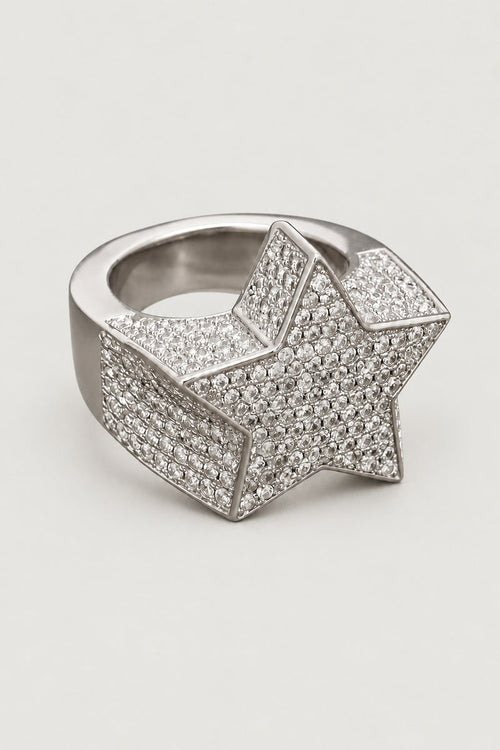
When the 2020s revived Y2K, the hypebeast silhouette came back with it: the baggy fit, the stacked jean, the zip-up over the face, the trucker hat, the jewelry worn outside the hoodie. The brands changed, the scarcity games got more sophisticated, but the proportions are 2004's. The grillz, Cuban chains and iced pendants in the Y2K jewelry collection are the same pieces the first hypebeasts wore to prove they had been paying attention to the right videos. Our hip-hop jewelry dictionary covers that vocabulary word by word.
Is Being a Hypebeast a Bad Thing?
The honest answer is that the word still means two things, and which one applies depends on why you buy. If you want a piece because it is scarce and you want people to know you got it, you are the thing the forums were mocking in 2005, and the mockery was fair. If you know the release calendar because you love the clothes, know the history, and would wear the hoodie whether or not anyone recognized it, you are a hypebeast in the sense the culture has grown into, and there is nothing wrong with that.
The test is simple. Take the resale value away. If you would still wear it, the hype was never the point. If you would not, it was. Hypebeast culture at its best is the most knowledgeable, most obsessive clothing community that has ever existed, and it is the reason a 2003 full-zip hoodie can be understood, twenty years on, as exactly what it was. At its worst it is a queue for a logo. Most people who use the word are somewhere in between, and most of them are dressed better than their critics.